For the first time, business owners can measure AI search traffic in their reporting.
First, Google Analytics (GA) added a dedicated AI Assistant channel that automatically tracks and labels traffic arriving from tools like ChatGPT, Gemini, and Claude, with no manual filters or workarounds needed.
Then, in June, Google launched new Search Generative AI performance reports directly inside Search Console, giving website owners a dedicated view of how their pages appear inside AI Overviews, AI Mode, and generative features in Discover.
Both updates are a major step forward, but they reveal only part of the story.
Google Can Now Measure AI Traffic and AI Visibility
One of the biggest challenges with AI search up to this point has been visibility. The GA4 AI Assistant channel solves it by assigning the correct click attribution. When someone visits your website from ChatGPT or Gemini, Google Analytics now automatically flags that visit as AI-sourced, assigning it its own channel group so it shows up separately from organic, paid, and direct traffic in your reports. You can now see which AI tools send traffic, whether those visitors convert, and how that channel is growing over time.
The new Search Console Generative AI reports allow you to see exactly how often your website pages surface inside AI Overviews and AI Mode, broken out by:
Page
Device
Country
Date
For the first time, you can see where you're appearing inside Google's AI-generated results, rather than just whether you're ranking.
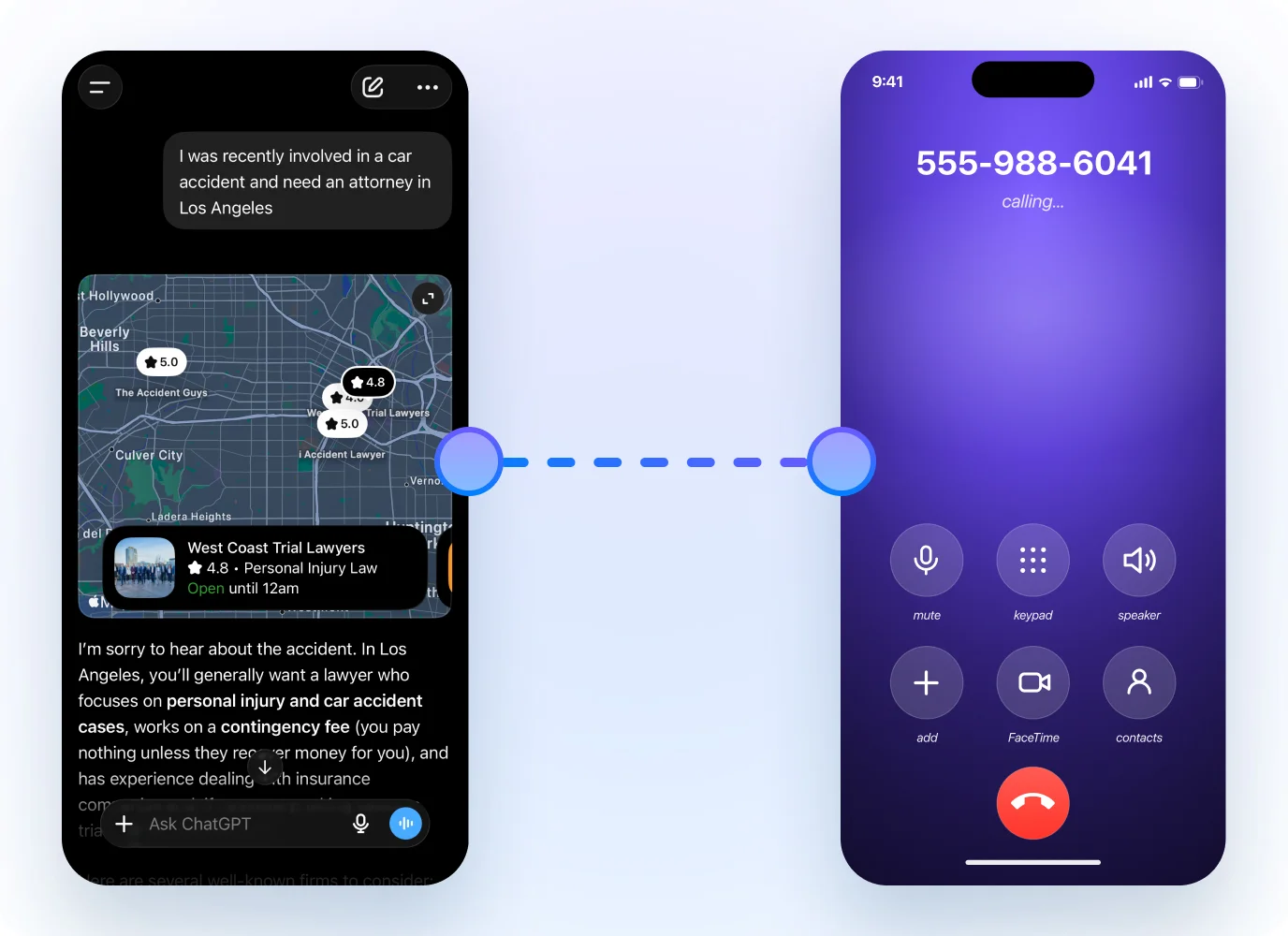
What neither tool measures is the lead that never clicks. A customer asks ChatGPT for the best plumber or attorney in their area, gets a recommendation, and calls directly. There is no website visit, no trackable impression, and often no indication in reporting that AI played a role in the lead.
"GA4's new AI Assistant channel solves the click attribution problem. But it leaves the influence attribution problem completely unsolved. We're not just tracking the click, we're tracking what happens after the website session surfaces."
— William Haddad, SVP of Product & Optimization
Scorpion addresses this by tracking referral sources and lead flow from AI channels directly, so when a customer calls after an AI recommendation, it doesn't get lost in your reports as an untracked lead.
AI Search Sends Fewer Leads, But Better Ones
AI search lead momentum is picking up faster than the traffic numbers suggest. Out of a pool of 1,699 Scorpion clients, roughly 52% received at least one AI-search lead in the last three months, and more than half of Scorpion's SMB clients are already getting business through AI, even if it doesn't show up clearly in their analytics.
Scorpion has been tracking AI search lead flow well before Google standardized the measurement in Google Analytics. While lead volume from AI search channels is currently low, our Leads AI product analysis shows that AI search leads outperform organic search on every quality metric we track:
Qualification rate: 76%, compared to 70% for traditional organic search, meaning more of those leads turn into real paying customers
Lead score: 74/100, versus 69/100 for organic search
This is an early sign validating that consumers captured through an AI search channel are lower in the funnel with higher intentions to purchase.
Lead attribution from AI search channels is possible, but currently incomplete. Attribution depends on the AI platform passing a referral source when a user clicks through to your website, and that doesn't always happen. When users click links inside a native mobile app rather than a web browser, the referral source is often stripped, causing the visit to register in Google Analytics as direct traffic instead.
"Website visit tracking from AI referrals is only part of the picture. AI platforms typically surface your main business number, not a unique tracking number, so when someone calls after seeing you in an AI response, that lead blends into your organic or direct traffic. You're likely getting credit for a website contact or listing call, with no visibility into the fact that AI drove it."
— William Haddad, SVP of Product & Optimization
Low AI Traffic Doesn’t Mean Low AI Influence
"The biggest misconception I'm seeing is mistaking low AI-referred traffic for low AI influence. Those are completely different things. AI may already be your most influential channel for first impressions, and you just can't see it in GA4."
— William Haddad, SVP of Product & Optimization
AI tools most often surface local businesses through direct recommendations, pulling from local listings, reviews, and website content, and delivering an answer inside the chat experience itself.
That leads to most AI users getting their answer, calling directly, and never clicking through to a website. Those leads show up in your reports as direct calls or organic contacts, with no trace of where they started. Scorpion tracks the lead flow from AI channels directly, so you always know where they came from.
What "Good Performance" Looks Like Now
The line between paid, organic, local listings, and AI channels is blurring fast, and the customer journey is more complex than any single report can capture. Trying to attribute every lead to one source, and measuring each channel in a silo, is increasingly going to point businesses in the wrong direction.
A better approach is to look at overall visibility and lead generation across channels:
Are you growing lead volume from AI search channels over time?
Are your organic and direct lead numbers holding as AI becomes a larger part of how customers find service providers?
Is your brand appearing in the AI experiences that matter for your specific category and market?
These are the questions that define performance now, and the ones Scorpion is built to help you answer. If you're a Scorpion client, this is already working for you. If you're not, and you're wondering how AI search is affecting your business, we'd love to show you what we're seeing.