Schema has become one of the most talked-about topics in local SEO, and many marketing companies are selling it as the key to AI search visibility. The market is full of conflicting claims, so it's important to look at what authorities in the space and the data say before jumping to conclusions, or worse, making bad choices about your digital marketing.
Before we jump in, let's talk about what schema is since it's the first time many are hearing it come up in broader circles. Schema markup is code added to your website that helps search engines like Google and Bing understand what's on your website pages. Instead of Google having to interpret that a phone number is a phone number or that a star rating belongs to a specific business, schema tells it directly. Schema has been and continues to be a useful piece of SEO infrastructure. It's one of many strategies and signals that ensure great search engine optimization execution.
What Google Said About Schema and AI Optimization (AIO)
In May 2026, Google published its official guide to optimizing for generative AI features in Search, and it directly contradicts a lot of what’s being communicated in the market.
Structured data is not required for AI search. Google has confirmed that AI Overviews and AI Mode run on content quality, authority, and relevance rather than schema. In traditional search, schema helps Google read your pages and surface things like star ratings, hours, and phone numbers directly in results. That said, Google treats it as a hint rather than a guarantee, so adding it doesn't mean it will automatically show up.
Google even dedicated a section of the guide to mythbusting, calling out specific tactics that businesses don't need, such as:
Llms.txt files
Content chunking for AI systems
Special AI-specific schema
Anyone selling you a schema audit as an AI fix is blurring that line to better position their services.
What the Research Found
The largest controlled study on schema and AI citations (linked references to specific sources or webpages that an AI system uses to help generate or support a response) came from Ahrefs in May 2026. They tracked 1,885 pages that added JSON-LD schema between August 2025 and March 2026, matched them against 4,000 control pages, and measured citation changes across Google AI Overviews, AI Mode, and ChatGPT.
The results:
Google AI Overviews showed a 4.6% decline
AI Mode showed a +2.4% change
ChatGPT showed +2.2%.
All three results fall within statistical noise, and no platform showed a meaningful lift from adding schema.
“If you’re already doing the rest of the SEO work well, JSON-LD isn’t going to be the unlock.” — Ahrefs, May 2026
A Search/Atlas study found no correlation between schema coverage and citation rates, and AuthorityTech found that 89% of AI citations come from earned media sources (third-party coverage, reviews, and directory listings), rather than brand-owned content. For a local plumber or personal injury attorney, that means your Google Business Profile (GBP) reviews and directory presence are doing more work in AI answers than anything on your website, schema included.
Additionally, a searchVIU study tested how ChatGPT, Claude, Perplexity, Gemini, and Google AI Mode process pages when fetching them in real time. Every system prioritized visible HTML content, and none of them extracted JSON-LD, hidden Microdata, or hidden RDFa. When an AI platform fetches your page, it reads what your visitors read.
When Google’s search engine crawls your website, it loads your pages the way a browser would, reading everything, including your schema. That information gets stored in Google's index, and Google's AI Overviews draw from that index. So while ChatGPT reads your page like a visitor and ignores schema entirely, Google has already processed it long before anyone asks a question.
The Fundamentals Still Win
Google’s own guidance and the research both point to the same set of fundamentals for local service businesses:
Content quality and specificity: Google’s AI optimization guide calls for “non-commodity content”, content that provides specific insight your competitors can’t replicate. For a plumbing company in Phoenix, that means service pages that speak to Phoenix and video that features your team, customers, and history in the market; not generic pages that could belong to any plumber in any city.
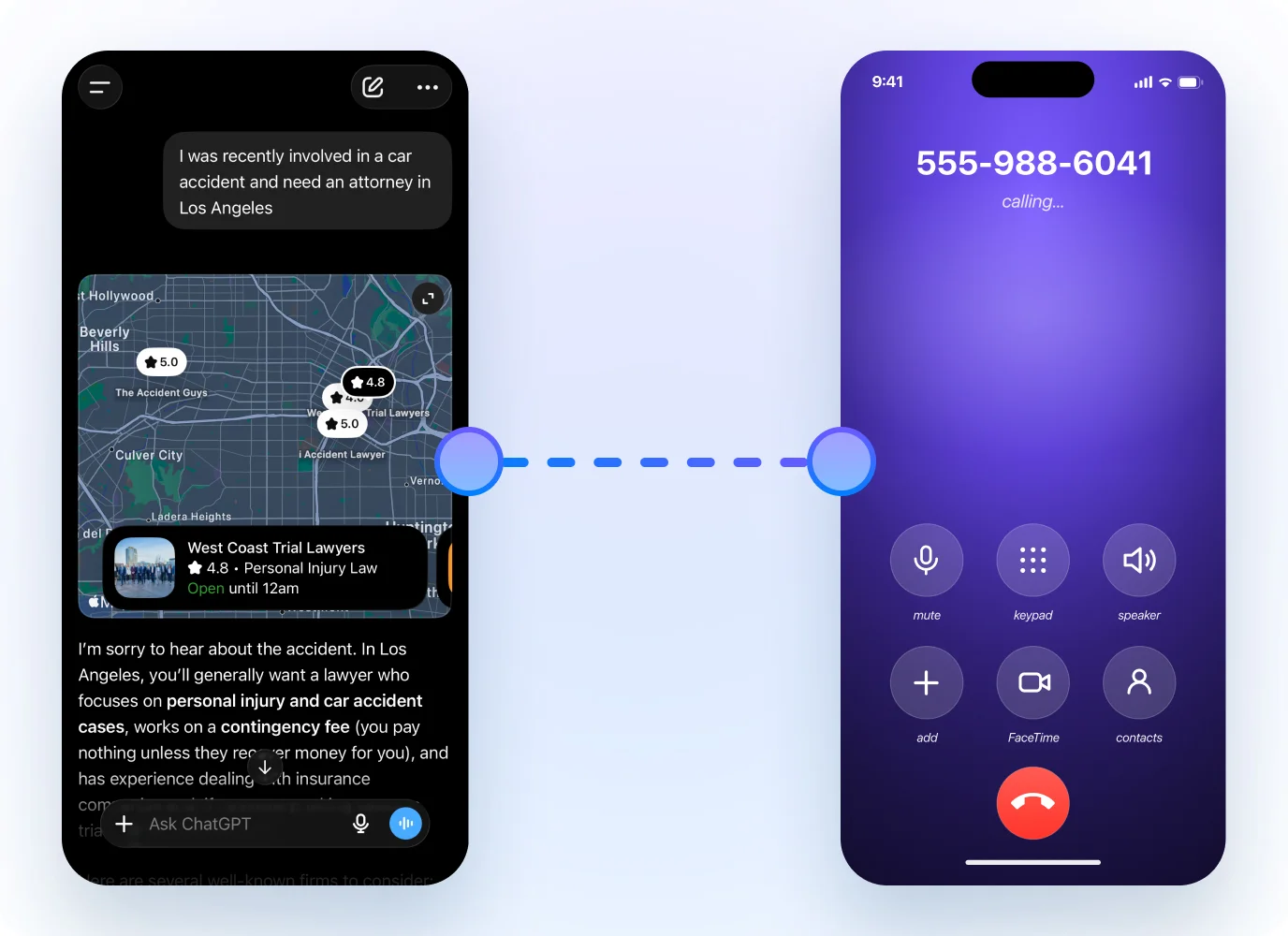
Google Business Profile (GBP): For local businesses, GBP is the primary structured data source Google uses for local searches, maps, and the local pack. When an AI system answers “who should I call for [service] in [city],” it’s pulling from GBP data, reviews, and local signals instead of schema on our website.
Off-site authority: That 89% correlation between earned media and AI visibility proves that reviews, directory listings, and mentions in local media are the signals AI systems trust. Your website tells your story, but third-party sources are what validate it.
Consistency across your digital presence: Your business name, address, phone number, services, and hours need to tell the same story everywhere on your website, GBP, directories, and social profiles. When those details contradict each other, AI systems lose confidence in your business and so do customers.
Site experience: Page speed, mobile usability, and clear navigation feed into core ranking systems, which are the same systems powering AI features.
Strategic targeting: You have to target the right keywords, the right geos, and the right services for your market. If the targeting is off, no technical SEO fix is going to change the trajectory.
Where Schema Can Hurt (If done wrong)
Schema creates risk when implemented incorrectly, and two traps are especially common for local service businesses:
Review markup: Some marketing vendors recommend adding review or aggregate rating schema to your service pages to trigger star ratings in Google results. There are actually two separate problems here. The first is Google's self-serving rule: review markup on LocalBusiness or Organization schema won't generate rich results when the business controls its own reviews. You can technically include it, but it won't do anything. The star feature is simply off the table. The second problem is how vendors get around that. Because Service schema isn't on Google's eligible list for review rich results either, the shortcut some vendors take is wrapping service pages in Product schema to force the aggregate rating to fire. That's where the real risk lives. Marking up "furnace installation" or "emergency plumbing" as a product misrepresents what the page actually is, and misleading structured data is what triggers manual action. Google can pull rich results from your entire domain for that, not just the pages where it's implemented.
FAQ schema: Google started pulling back on FAQ rich results in August 2023, limiting them to well-known government and health websites. The May 2026 update removed the last of that eligibility entirely, so if your site isn't CDC.gov or a state health department, those expandable dropdowns have been functionally gone for a while. When SearchPilot ran a controlled experiment removing FAQ schema from pages while keeping the FAQ content intact, traffic didn't move. Separately, SearchPilot also found that adding genuine FAQ content to pages drove a 9.7% increase in organic traffic.
"Inaccurate schema is arguably worse than none at all. If you're going to do it, it has to be right, and at scale, right means systematic, not manual." — William Haddad, SVP of Product & Optimization
Scorpion’s Commitment to Getting it Right
At Scorpion, we believe schema is useful infrastructure, and it’s worth doing right:
It supports rich results eligibility
It helps search engines understand content
It keeps your business information coherent across the web
However, schema is not the end-all be-all to organic performance, and it’s not the AI unlock vendors are selling it as.
Schema does have real value in traditional search. But that's a traditional SEO benefit, not an AI hack. Vendors blurring that line know exactly what they're doing. Stay focused on the fundamentals." — Jamie Adams, Scorpion’s Chief Revenue Officer
For local service businesses, the proven path to organic visibility in both traditional search and AI-generated answers runs through great content, an accurate and active GBP, brand authority, strategic targeting, and the kind of presence that comes from video and digital PR done right.
At Scorpion, our objective is to help our clients predictably grow their business through digital marketing. Ensuring our clients improve their traditional organic search results remains a priority. We continue to invest in schema and are adding additional schema management tools to our CMS and publishing system. When a phone number changes or a new location opens for our clients, the schema updates automatically across their site. We're doing this because schema done poorly creates problems, and our clients shouldn't have to worry about that. It should simply be correct, always, as a natural byproduct of a well-built site and system.
Search will continue to evolve, and at Scorpion, your organic search foundation is already in place. If you're a current client, we are already on top of this for you. If you're not, we'd love to have a conversation about how we can help.