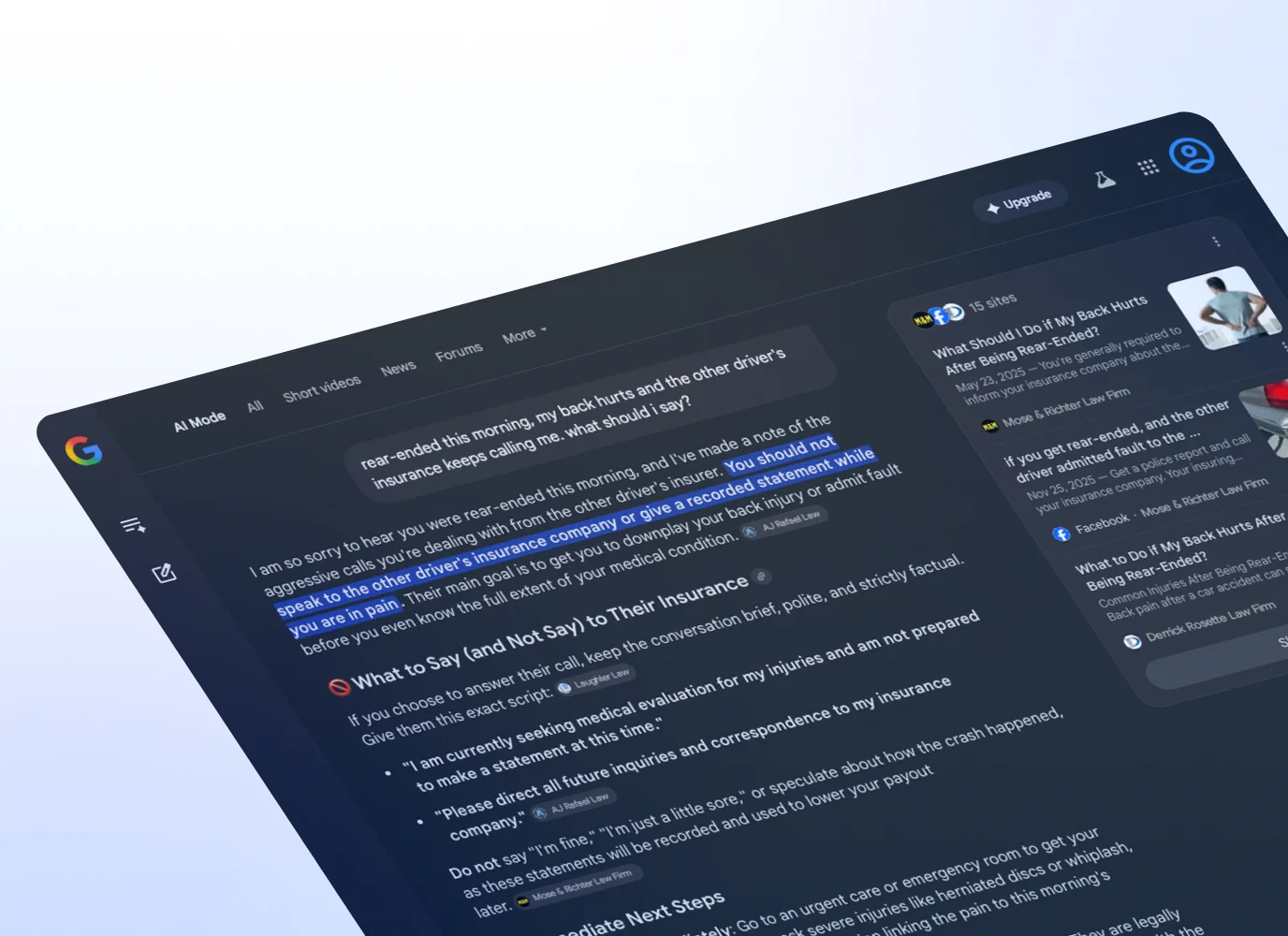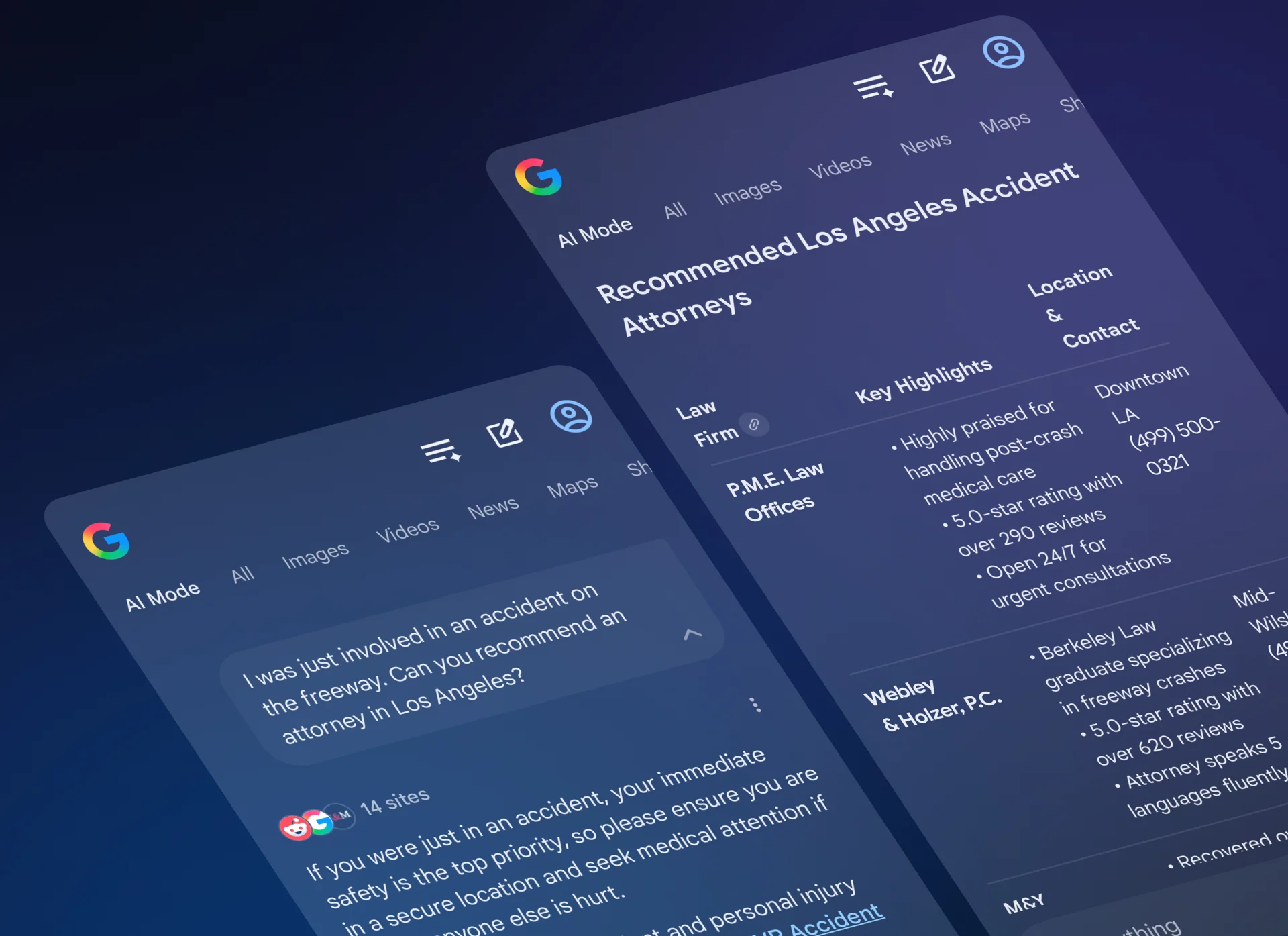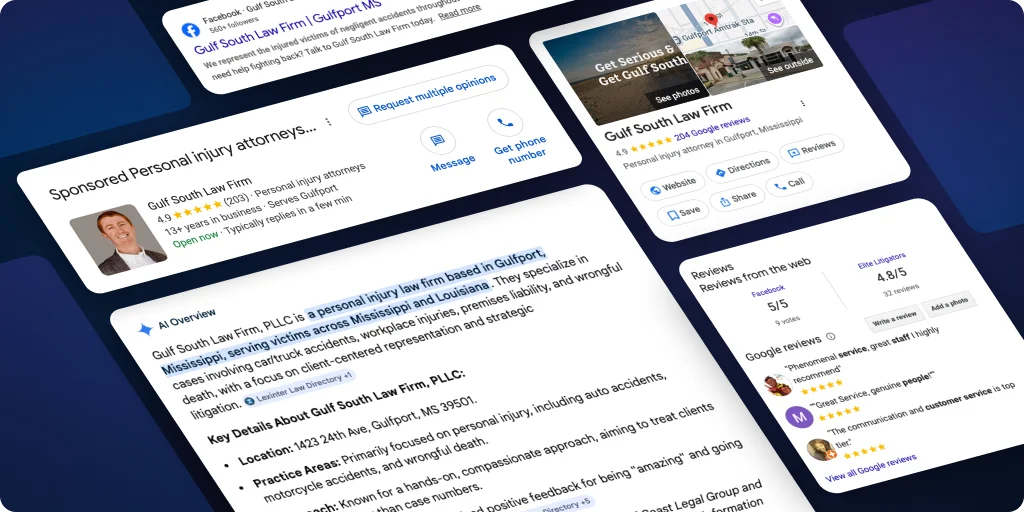
For the last year, local business owners have been told that AI search demands a brand-new discipline: a separate playbook with its own acronyms, its own specialists, and often its own invoice, sold under labels like AEO and GEO (among others).
Google's new guidance pushes back on that directly. According to Google, getting found in generative AI search is part of the search experience, which means it is still SEO. The AI features pulling answers into AI Overviews and AI Mode run on the same core ranking and quality systems that have always decided who shows up in Google Search. The good news is that if you have been investing in the fundamentals, you are not starting from scratch.
Key Takeaways
Google made it official. Getting found in its AI features is still SEO. The same fundamentals that earned you visibility still apply, and there is no separate AEO or GEO playbook for Google Search.
Google named the tactics you can skip. For its AI features, Google says it does not rely on llms.txt files, content chunking, AI-specific rewriting, or special schema. Treat these as optional rather than must-haves, and put your energy into the fundamentals first.
Non-commodity content is the difference-maker. Generic, templated pages will not set you apart. Content built on your own experience and specifics is what gives AI a reason to surface you.
“Still SEO” is not “set it and forget it.” The label has not changed, but the stakes have. Businesses that treat this as a reason to coast are the ones that quietly lose ground.
This is Google's guidance for Google. ChatGPT, Perplexity, and other AI tools can weigh things differently, which is exactly why a broad, consistent presence still matters.
Google Says It’s Still SEO
For a while, the message to local businesses has been that AI changed everything, and that staying visible now takes a different skill set. Google's new guidance says otherwise, and because both run on the same systems, the way you show up in AI features is the same way you have always shown up in Search.
If you have watched the AEO and GEO conversation get louder and more expensive, hearing that the fundamentals still apply is genuinely reassuring. The features pulling answers into AI Overviews and AI Mode read the same quality signals that have always decided who ranks. The reviews, the content, and the complete Google Business Profile you have been building are the same things AI looks at when it decides who to recommend.
Same Signals, but AI Picks Favorites
Google's framing gets a little too reassuring, and it comes down to one distinction. “Search engines rank pages. AI recommends brands,” says Holly Holder, Director of Ranking at Scorpion. “That is a different game, even if some of the same signals feed it.” A recent Ahrefs study of roughly 150 million U.S. keywords found that almost half of all Google searches are branded, meaning people are searching for a specific business by name, and that share is only going to grow as AI search matures. AI is scouring your entire digital footprint to decide the best brand to put forward, not just reading your website.
“When a business owner hears ‘still SEO’ and pictures the ranking work they have always done, they are missing the bigger shift,” Holder says. “AI is picking favorites instead of presenting options, and it is building that answer from reviews, third-party mentions, video, and earned media as much as from your site.”
What You Can Stop Worrying About
Google is clear about what it does not weigh as heavily as the hype suggests. For its AI features, the tactics often pitched as must-haves get a lot more credit than they deserve: llms.txt and other special machine-readable files, chopping your content into chunks, rewriting pages in an AI-specific style, chasing every long-tail version of a keyword, and hunting for special schema that supposedly unlocks AI visibility. The lesson isn’t to ignore or completely abandon these, but to take them with a grain of salt and treat Google’s word as directional. If you have been sold these as the essential work, that framing is what to let go of, so you can spend your time and money where it counts.
Structured data, for one, still earns its place. It is the behind-the-scenes code that helps search engines understand what your business is and what it offers, just not as a backdoor to AI. Google's own guidance is still evolving here, so the smart move is to keep these on your radar without betting your whole strategy on them.
The bigger point to hold onto is that all of this is guidance for Google's own AI features. ChatGPT, Perplexity, and other AI tools weigh signals differently, so skipping the gimmicks does not mean skipping the broader work that builds your presence across the web. What Google is really saying is to stop writing for the machine and start writing for the person.
The Work: Content Only You Can Write
Google keeps pointing back to the difference between content that lives on thousands of sites and content built on what only your business knows. Plenty of useful content, like a "7 Tips for First-Time Homebuyers" post or a "5 signs you need a new water heater" article, already has a version on countless sites, which gives AI less reason to single yours out.
What sets you apart is the material only your business has, like a case you won and how you won it, the diagnosis and cost of a job with photos to show the work, or a customer's situation and what you did about it. Google's own guidance makes the same point with its example of a specific "Why We Waived the Inspection and Saved Money" story over a generic homebuying listicle.
"It is a reason to lean into your own expertise and pull the firsthand details into the work going forward," says Holder. Case results, customer experiences, and the perspective of the people doing the work are some of the most valuable assets a business has. As Holder notes, video and photos go even further: they show people doing the work, which matters for the customer deciding who to call just as much as it does for AI.
But there is a second layer you do not fully control. Beyond the content you publish yourself, what others say about you matters just as much. “This is where digital PR becomes one of the most valuable investments a business can make. AI treats self-described expertise as a claim and third-party recognition as proof, whether that is a press placement, an industry award, an expert quote, or a mention on a podcast. The mention itself carries weight, whether or not it includes a backlink, because AI is reading the entire web to decide who to trust, not just counting links. That is why firsthand assets and outside validation work together: video and photos show the work is real, and digital PR confirms other people noticed,” Holder says.
Why “Still SEO” Is Not a Reason to Coast
Google’s reassuring headline can be misleading: “Still SEO” is easy to hear as “nothing has changed, so you can ease off.” For any business that watched its rankings move over the last several months, that is the wrong lesson. The fundamentals have not changed, but how much rides on them has, because AI is using them to choose a single answer rather than a page of options.
When AI cannot tell a clear story about your brand, it will not recommend you, so you essentially become invisible to it. It pieces together a confused picture from scattered signals and gets your story wrong, or a competitor with a stronger, more consistent presence simply takes the spot that should have been yours. We saw this play out with Google's March 2026 core update, where businesses with clean, consistent signals held their ground over the businesses without them.
Google even says you do not have to do everything in its guide, and that some content does well with no overt SEO at all. That is freeing if it means you can stop chasing every new AI tactic making the rounds. But if it becomes your excuse to ease up on the brand signals that drive rankings, that’s where you open the door to the competition.
How This Fits With What Is Already Coming
Our recent coverage of AI Overviews and local search looked at how AI is moving into discovery, decision, and even first contact, which is only half of the story about where search is headed. The guidance here is about the other half: the work that earns you a place once AI is the one making the recommendation. Both lead back to the same place. AI is changing what visibility looks like, but not what earns it. What earns it is a brand AI can confidently name.
What to Do With This
None of this means adopting a new playbook or starting over; it means putting your energy where it counts. Don't over-invest in the tactics Google downplayed, and spend the bulk of your time on the things that consistently work: the firsthand details only your business can share, a steady flow of reviews, and a Google Business Profile you keep current.
Google said the playbook is the same, but the bar is not. The businesses winning in AI search are the ones earning third-party validation: the press, awards, and industry recognition AI treats as proof. They show up in their communities, put out video and social content from the people doing the work, and make themselves easy to find wherever someone goes looking. That is the direction good SEO has been heading for a while.
You cannot hide behind gimmicks, and you cannot fake being a business. "People and AI are both looking for human signals more than ever," Holder says. "The question worth asking is how your business is putting those signals out into the world."
If you want to know where yours stands, let's talk.