Most AI advice for law firms is backwards. The question is not “Should AI be used?” It is where it belongs in intake and marketing, and what it must never do. The firms getting results are using AI to speed up first response, capture cleaner intake details, and move information into the systems teams already rely on. The firms getting burned are treating AI like a shortcut.
This article draws directly from our Not All AI Is Created Equal guide and focuses on two critical questions every firm should be asking:
Where should AI be embraced today?
What risks should firms actively watch for?
Where to Embrace AI for Real Business Impact
AI delivers the most value when it supports speed, consistency, and clean handoffs across the client journey. That journey does not stop at a form fill or phone call. It continues through intake, scheduling, and follow-up, all the way to a signed case.
Faster intake and communication
Prospective clients expect fast responses.
Research shows that more than 70% of people will move on if a firm does not respond within 24 hours.
In competitive practice areas, even a few hours can mean the difference between signing or missing out on a case.
AI-powered chat and communication tools help firms respond within minutes, even outside business hours. These tools can:
- Greet visitors immediately
- Set expectations about next steps
- Begin collecting basic information without delay
Within Scorpion’s RevenueMAX, tools like Scorpion Connect with AI Chat allow firms to stay responsive 24/7 while maintaining control over messaging and tone. The goal is not to replace staff, but to ensure no opportunity is lost due to slow response.
Understanding case fit without crossing boundaries
Early conversations should gather enough information to determine whether a matter fits the firm’s scope, without drifting into legal advice or requesting sensitive details too soon.
AI works well when it is limited to structured, non-legal questions such as:
- Type of issue
- Location
- Urgency
- Contact information
This approach helps filter out conflicts and out-of-scope matters while respecting ethical boundaries. It also improves the quality of information handed to intake teams, reducing back-and-forth and rework.
Scorpion’s Connect with AI Chat greets website visitors in seconds, answers common questions in the firm’s voice, collects essential details, and sets next steps. When an inquiry enters into legal or case specific territory, AI Chat routes to a legal team member.
Scheduling consultations at the right moment
One of the most common drop-off points in the intake process is scheduling. When potential clients are told someone will “follow up later,” momentum is lost.
AI can help by:
- Offering available consultation times during the first interaction
- Confirming appointment details
- Sending reminders to improve show rates
Scorpion Convert supports this by booking consultations during live conversations across chat, text, and calls. The result is fewer missed opportunities and more consultations set on the first touch.
Seamless handoffs into intake and case management
AI delivers its full value only when information moves cleanly into the systems your team relies on every day. Manual re-entry creates errors, delays, and frustration.
Done correctly, AI should:
- Push standardized data directly into intake and case management systems
- Create a consistent record for every new contact
- Eliminate duplicate entry across marketing, intake, and operations
Supporting visibility in a changing search environment
Clients still rely heavily on Google, but AI-generated summaries are increasingly shaping what prospects see and trust. Firms should prepare for both.
AI supports visibility when it is paired with:
- Matter-specific website content
- FAQs that reflect real client questions
- Consistent firm details across locations, hours, services, and attorney credentials
Tools like Ranking AI help improve organic and local visibility by aligning content updates with real search behavior and performance data. The emphasis remains on clarity and accuracy, not volume.
What to Watch Out For When Evaluating AI
AI can help firms respond faster, sign better cases, and reduce strain on staff. But without planning, it introduces risk. These are the four issues that matter most, along with concrete steps to manage them.
1) Data leakage and confidentiality
The risk: Potential client details stored longer than expected, shared inappropriately, or reused to train outside models.
How to reduce the risk: Vendor contracts should ban training OpenAI models on firm data, limit retention, and enforce role-based access.
2) Inaccurate or misleading responses (hallucinations)
The risk: AI generates confident but incorrect statements about practice areas, jurisdictions, fees, or outcomes.
How to reduce the risk: Ground responses in firm-approved content and require the AI to use exact firm details (hours, phone numbers, locations) from a single approved source. Require internal approval by a named role before the homepage, practice area pages, landing pages, and ads go live.
3) Vendor data handling
The risk: Unclear storage location, retention, sub-processors, and no audit trail.
How to reduce the risk: Specify storage, retention, and sub-processors in the agreement. Require audit logs, export and deletion capabilities, and breach response details.
4) Generic models without legal guardrails
The risk: Tools drift into legal advice, make promises, or ask for sensitive information too early.
How to reduce the risk: Enforce legal-specific guardrails that block legal advice, outcome promises, and premature collection of sensitive information. Pair guardrails with ongoing evaluation across scenarios, and define escalation rules so sensitive or complex situations go to staff with documented follow-up.
Using AI With Intention
When AI is applied intentionally, it supports faster response, cleaner intake, and better visibility all while reducing pressure on staff.
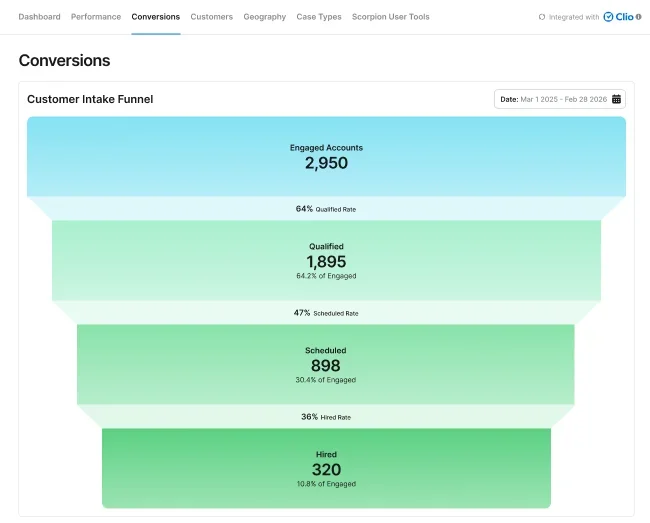
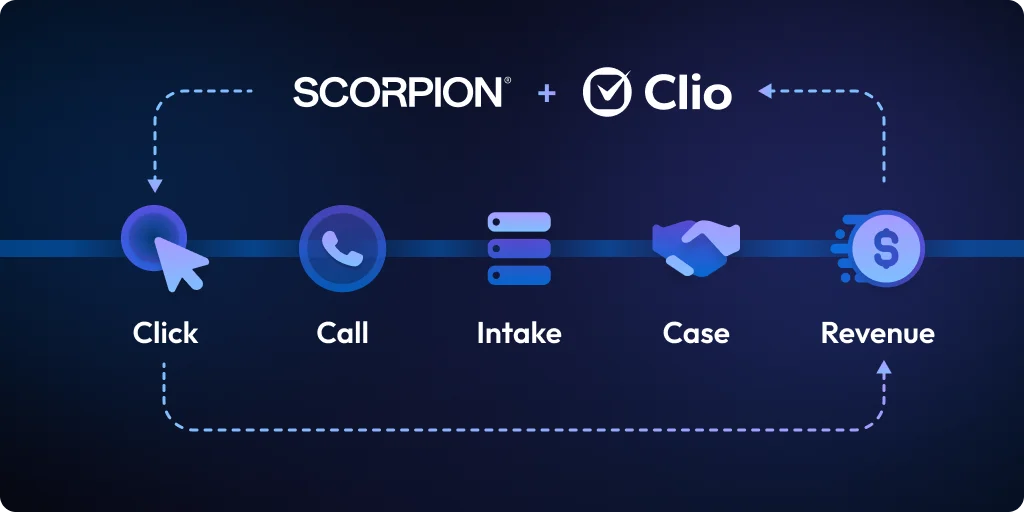
Scorpion’s RevenueMAX was designed to connect AI across marketing, intake, and case management so performance can be measured from first contact to signed case. That connection is what allows AI to support growth instead of adding complexity.
For partners, marketing, and IT professionals in law firms, the path forward is about choosing the right applications, demanding accountability, and working with marketing partners who understand both the opportunity and the risk.
The firms that do this well will build a more predictable, sustainable growth engine, one that leadership can see, measure, and manage.
.png.webp)
.jpg.webp)