Key takeaways:
Traffic and rankings no longer tell the whole story. Homeowners can now get answers from AI Overviews and other AI tools without visiting a pest control operation’s website.
Track AI visibility alongside traditional SEO rankings. Look at whether your operation appears in AI answers, gets cited, and is recommended for the services and locations you want to grow.
Measure what digital search contributes to the business. Qualified leads, booked treatments, recurring services, and revenue provide a clearer picture of whether search visibility is driving growth.
Look beyond your website. Reviews, local listings, industry mentions, and other third-party sources can influence how search engines and AI tools understand and recommend your operation.
The Search Metrics Pest Control Operations Should Be Watching Now
For years, PCOs could look at website traffic and search rankings to gauge whether their SEO was working. But as more homeowners use AI tools to research pest problems and find local providers, those numbers tell only part of the story.
A drop in website traffic, for example, doesn’t necessarily mean fewer homeowners are finding your operation. It may mean they’re getting answers elsewhere before they ever reach your website. To understand whether your SEO is actually driving business, you need to look beyond traffic and rankings.
Why traffic alone tells an incomplete story
Google still dominates search, handling roughly 210 times as many searches as ChatGPT. But AI search is growing quickly. As recently as 2024, Google handled about 373 times more searches than ChatGPT, according to SparkToro and Datos.
At the same time, AI is changing the Google search experience itself. AI Overviews now appear in more than half of Google searches. Ahrefs says that when one appears above the top organic result, that result can see roughly a 58% drop in click-through rate.
The impact is especially noticeable when homeowners are researching a problem. Google displays AI Overviews for 92% of informational searches, such as “How are mice getting into my attic?” compared with just 15% of direct local searches like “pest control near me.”
For pest control operations, that means a homeowner’s search may begin well before they start looking for a provider. They may first ask what’s causing the problem, whether professional treatment is necessary, or what treatment might cost. Your operation can influence that research even if the homeowner doesn’t visit your website right away.
Holly Holder, Director of SEO at Scorpion, sums up what that shift actually means: "Your site is now becoming evidence for AI, rather than a destination for people to do their research. The website still has a role in helping homeowners research treatments and contact the business."
None of this means organic search stopped working. It means traditional rankings and website traffic no longer capture all the ways a business can gain visibility within online search.
Measure AI search alongside rankings
Ranking on page one still matters, but it no longer tells you everywhere your operation is being seen. A pest control operation can rank well in traditional Google results and still be absent when ChatGPT, Google AI Overviews, or other AI tools answer a homeowner’s question.
That makes AI visibility another metric worth watching alongside traditional rankings. Look at whether your operation appears in AI answers, whether your content is cited, and whether your business is recommended for the treatments you offer, locations you serve, and services you’re trying to grow.
The goal isn’t to replace rankings with a new metric. It’s to give a more complete picture of where homeowners find your operation.
Look at search performance as a whole
- No single metric can tell you whether your search strategy is working anymore. Instead, look at performance across four areas:
- Traditional search visibility: Track where your operation ranks for important searches in your market and whether homeowners are still finding your website through organic search. Rankings and traffic remain useful indicators, but they shouldn't be viewed in isolation.
- AI visibility: Look at whether your operation appears in AI-generated answers, whether your content is cited, and how often your business is recommended compared with other pest control operations in your market.
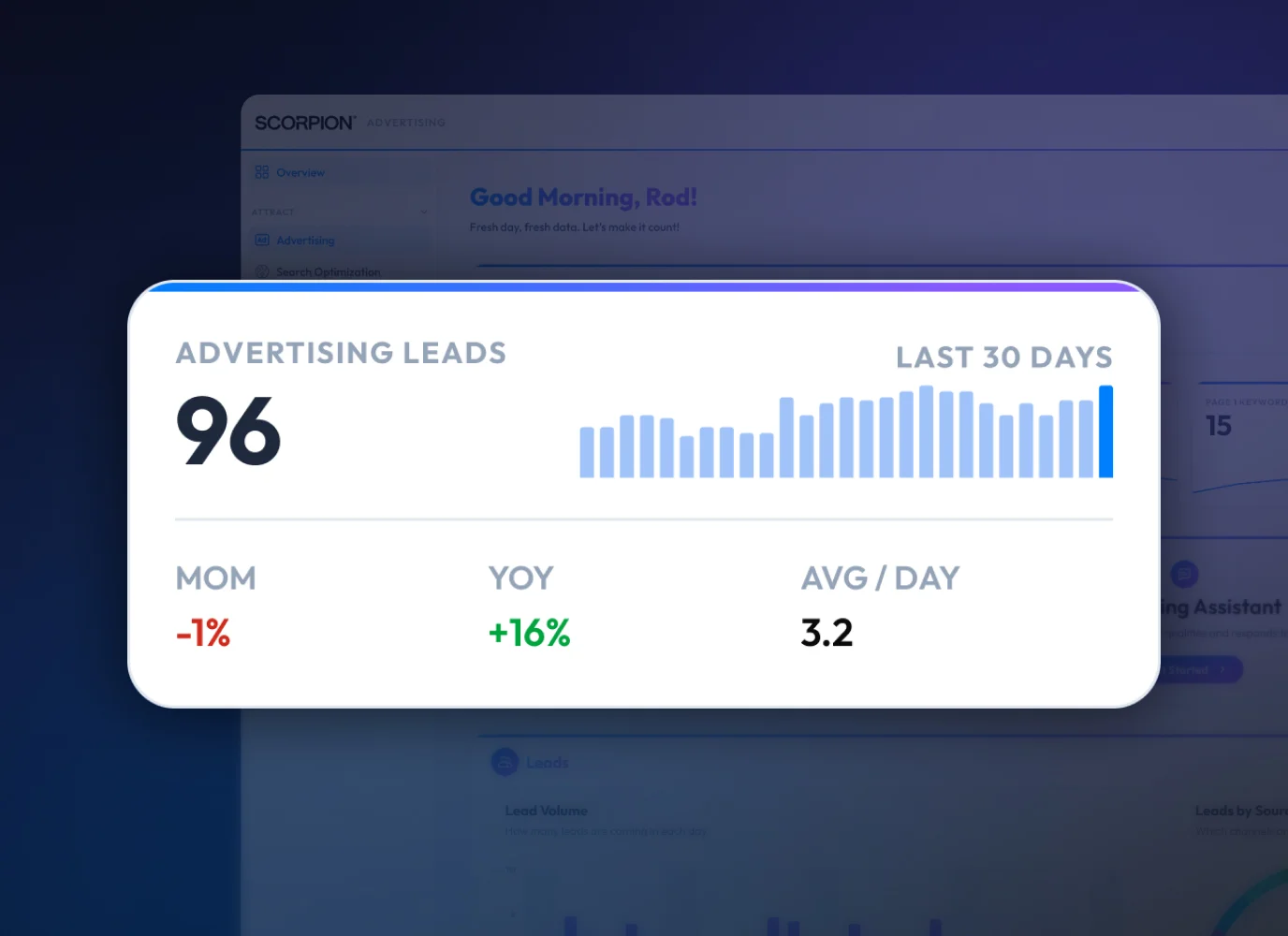
- Business results: AI-search visibility only matters if it contributes to growth. Track whether organic and AI search generate qualified leads, booked treatments, recurring services, and revenue.
As Holly Holder, Director of SEO at Scorpion, explains, “Attribution is messy. We need to go back to overall success, leads, and revenue from the organic platform as a whole, rather than always chasing channel-level detail.”
- Online visibility beyond your website: Pay attention to the sources AI uses to understand and recommend your operation. Research from AirOps found that a business is roughly 6.5 times more likely to be cited in an AI answer through outside coverage than through its own website content.
For pest control operations, that means reviews, local listings, industry mentions, and other third-party sources should be part of the measurement conversation. Together with your website, they help search engines and AI tools understand who you are, what services you provide, where you operate, and whether your operation is a relevant recommendation.
The question is no longer simply, “Where do we rank?” It’s “Are homeowners finding us across search and AI, and is that turning into business?”
If you're already with Scorpion, ask your account manager to walk you through what your search visibility looks like across these metrics, not just where you rank. If you're not, talk with a Scorpion pest control marketing expert about what to include in your search performance report.